Scientist · India
Srinivasa Ramanujan
He failed college twice, did his maths on a slate because paper cost too much, and wrote one letter to Cambridge that changed number theory.
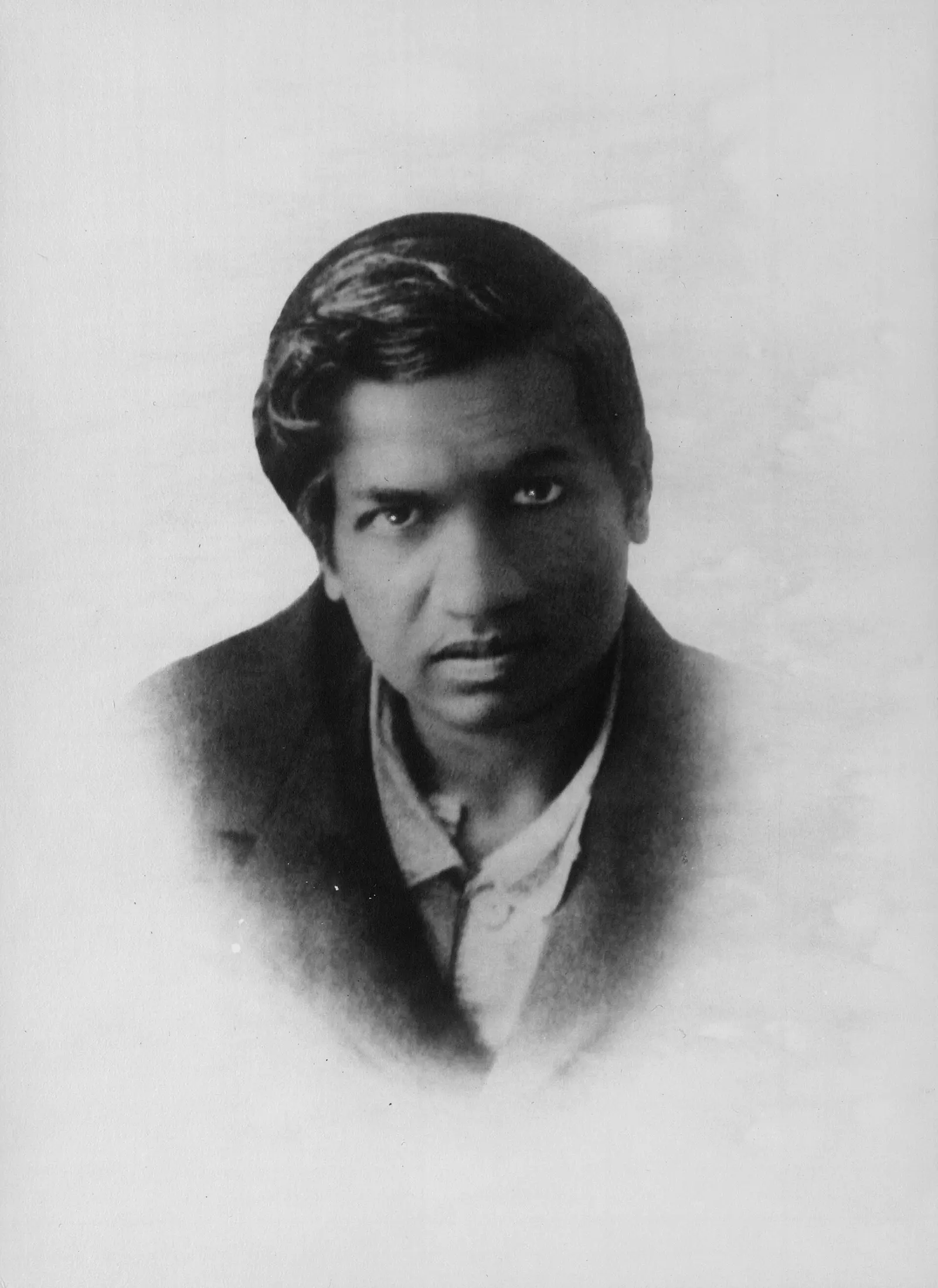
At a glance
| Born | 22 December 1887, Erode (raised in Kumbakonam), Tamil Nadu |
| Died | 26 April 1920, Kumbakonam, aged 32 |
| Field | Number theory, infinite series, continued fractions, modular forms |
| Formal degree | None in India (failed the FA exam twice); BA by Research, Cambridge, 1916 |
| Day job | Clerk, Madras Port Trust, Rs 30 a month (1912) |
| Key mentor | G. H. Hardy, Trinity College, Cambridge |
| Big honours | Fellow of the Royal Society (1918); first Indian Fellow of Trinity College (1918) |
| Output | Nearly 3,900 results |
| Remembered on | 22 December, National Mathematics Day in India |
| The question his life answers | How do you keep going when every exam says you failed? |
“I had no mind to smother his genius by an appointment in the lowest rungs of the revenue department.”Patrons and a clerk's job
01Where he came from
- Born on 22 December 1887 in Erode and raised in Kumbakonam, in today's Tamil Nadu.[2]
- His father was a clerk in a sari shop. His mother, Komalatammal, sang at a local temple. The family was of modest means.[2][3]
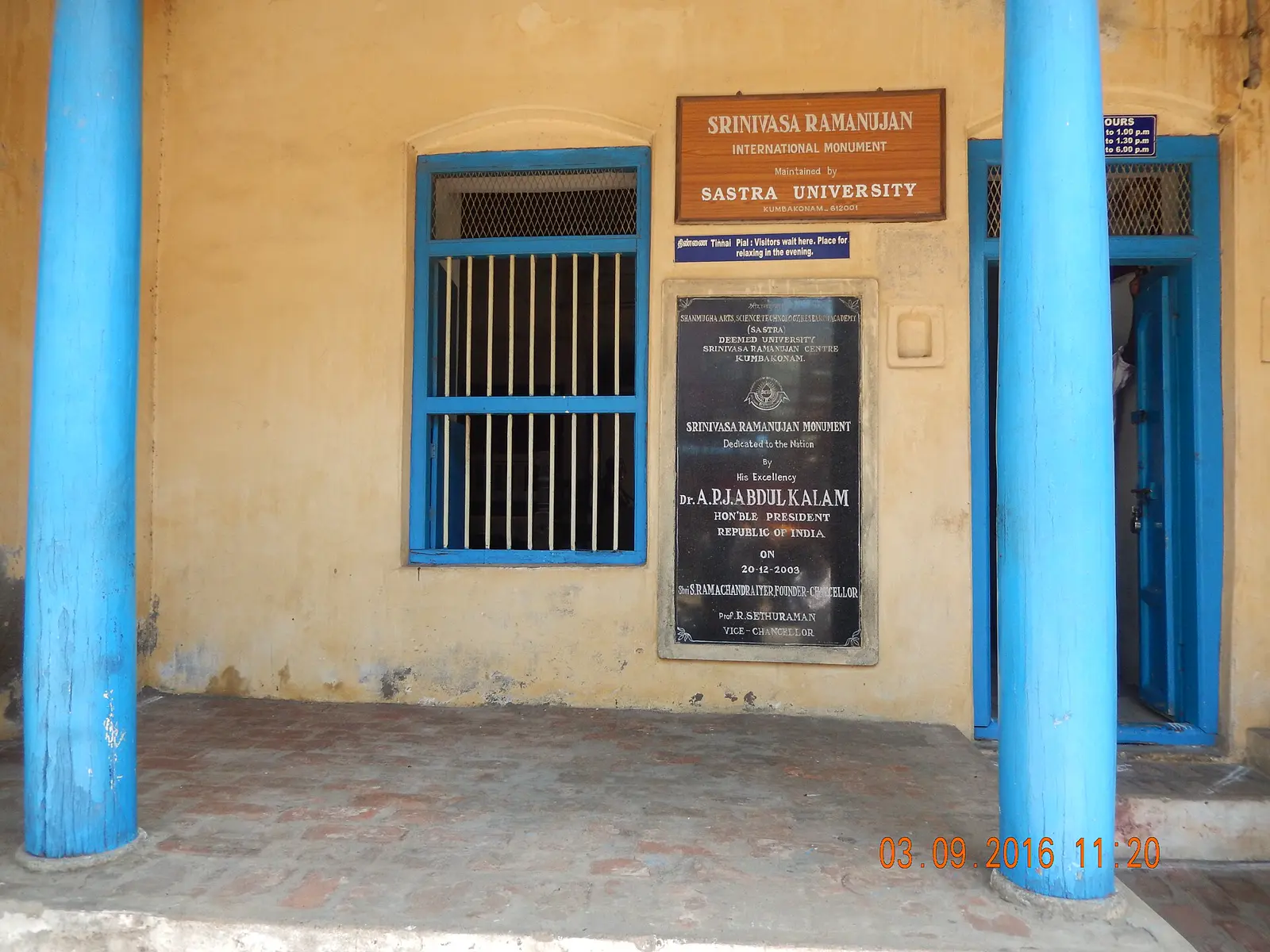
- They lived in a small house on Sarangapani Sannidhi Street. It is now a museum.[2]
- He survived smallpox in December 1889. Three younger siblings died as babies.[2]
- By 11 he had used up the maths knowledge of two college students lodging at his home. By 13 he had mastered an advanced trigonometry book by S. L. Loney.[2]
- At 16 he borrowed G. S. Carr's Synopsis, a list of about 5,000 theorems with almost no proofs. He later wrote his own results the same terse way.[2][3]
- In 1904 he worked out Euler's constant to 15 decimal places and won his school's K. Ranganatha Rao maths prize.[2]
02Failing college, living on almost nothing
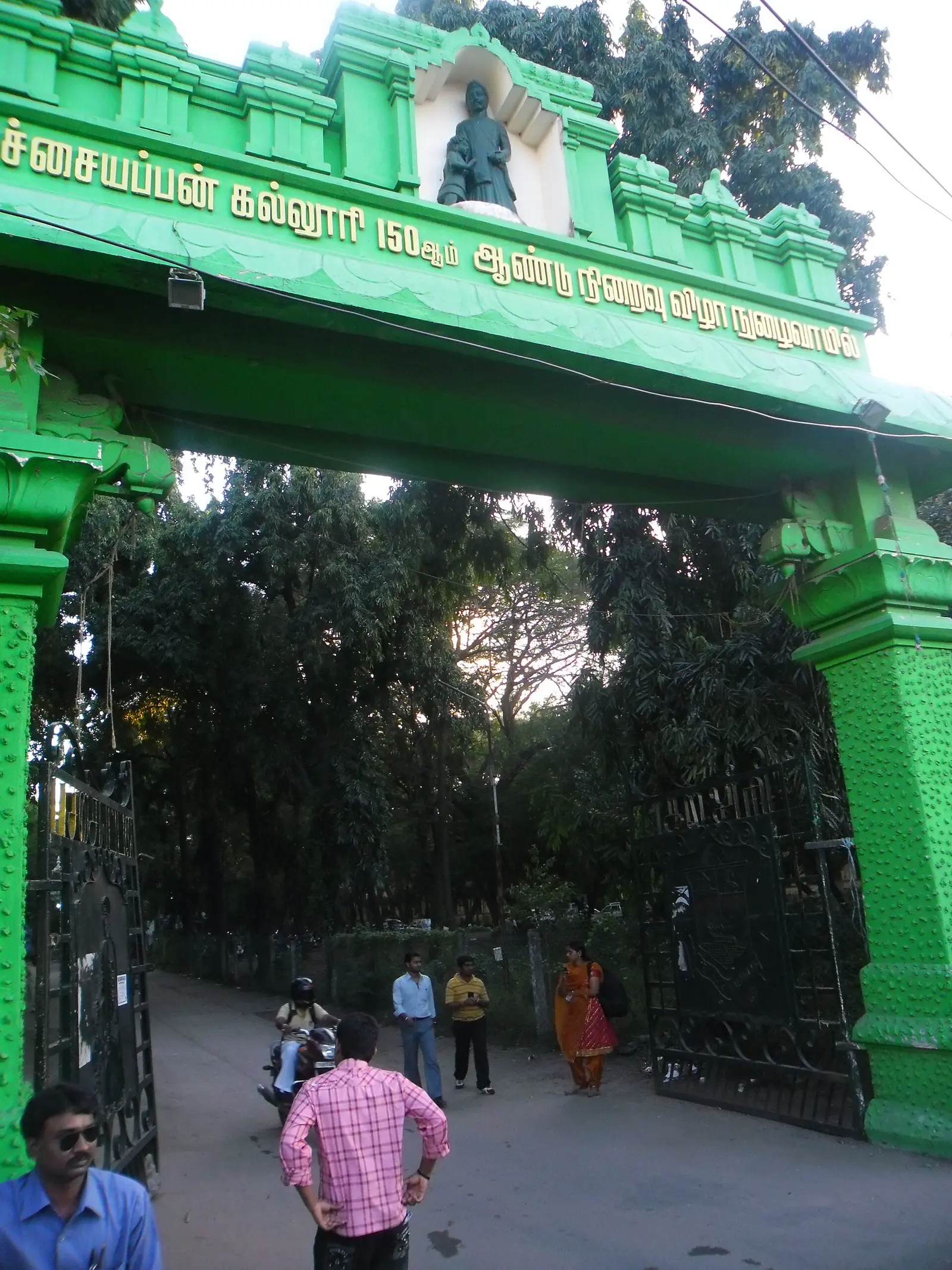
- He won a scholarship to Government College, Kumbakonam, but studied only maths, failed most other subjects and lost it.[2]
- In August 1905 he ran away from home. His mother put a missing-person notice in the newspaper.[2][3]
- At Pachaiyappa's College in Madras he answered only the maths questions he liked. He failed the FA exam in December 1906, and again a year later.[2]
- He left without a degree and lived in extreme poverty, often close to starving.[2]
- He earned money by tutoring Presidency College students for the same FA exam he had failed.[2]
- Paper was expensive, so he did most of his working on a slate and copied only the final results into his notebooks.[2]
- In 1909 he married Janaki, who was 10. When he needed a simple operation, his family could not pay. A doctor did it free in January 1910.[2]
- Sick again in late 1910, he told a friend to hand his notebooks to two professors if he died.[2]
03Patrons and a clerk's job
- In 1910 he showed his notebooks to V. Ramaswamy Aiyer, hoping for a revenue office job. Aiyer said: "I had no mind to smother his genius by an appointment in the lowest rungs of the revenue department."[2]
- Aiyer sent him to R. Ramachandra Rao, the Nellore district collector, who recalled: "He was miserably poor... He said he wanted a pittance to live on so that he might pursue his researches."[1]
- Rao agreed to support him with money so he could keep doing research.[2]
- In 1911 he published his first paper, on Bernoulli numbers, in the Journal of the Indian Mathematical Society.[2][3]
- In early 1912 he took a temporary job in the Accountant General's office at Rs 20 a month. It lasted a few weeks.[2]
- His application to the Madras Port Trust said: "I have been devoting all my time to Mathematics and developing the subject."[2]
- On 1 March 1912 he became a clerk there at Rs 30 a month. He finished his work quickly and used spare time for maths, with his boss Sir Francis Spring's support.[2]
04The letter to Hardy
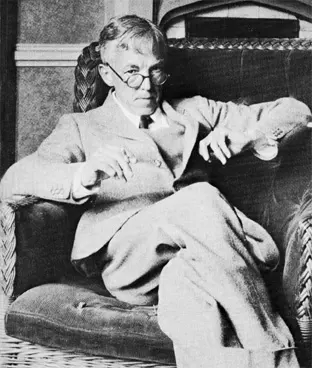
- British experts were cool. M. J. M. Hill in London said he "has got on to wrong lines". Two Cambridge professors, Baker and Hobson, did not respond.[3][2]
- On 16 January 1913 he wrote to G. H. Hardy: "I beg to introduce myself to you as a clerk in the Accounts Department of the Port Trust Office at Madras on a salary of only £20 per annum."[3]
- "Being poor, if you are convinced that there is anything of value I would like to have my theorems published."[3]
- He sent more than nine pages with over 120 results. Hardy and Littlewood decided they "must be true, because, if they were not true, no one would have the imagination to invent them".[3][2]
- Bertrand Russell found them "in a state of wild excitement" about "a Hindu clerk in Madras making 20 pounds a year".[3]
- His reply to Hardy was blunt: "I am already a half starving man. To preserve my brains I want food and this is my first consideration."[1][3]
- Hardy's backing got him a Madras University scholarship of Rs 75 a month for two years, from May 1913.[2]
- He first refused to travel abroad on religious grounds. He agreed after his mother dreamt that the family goddess told her to stop standing in his way.[2]
05Cambridge breakthroughs
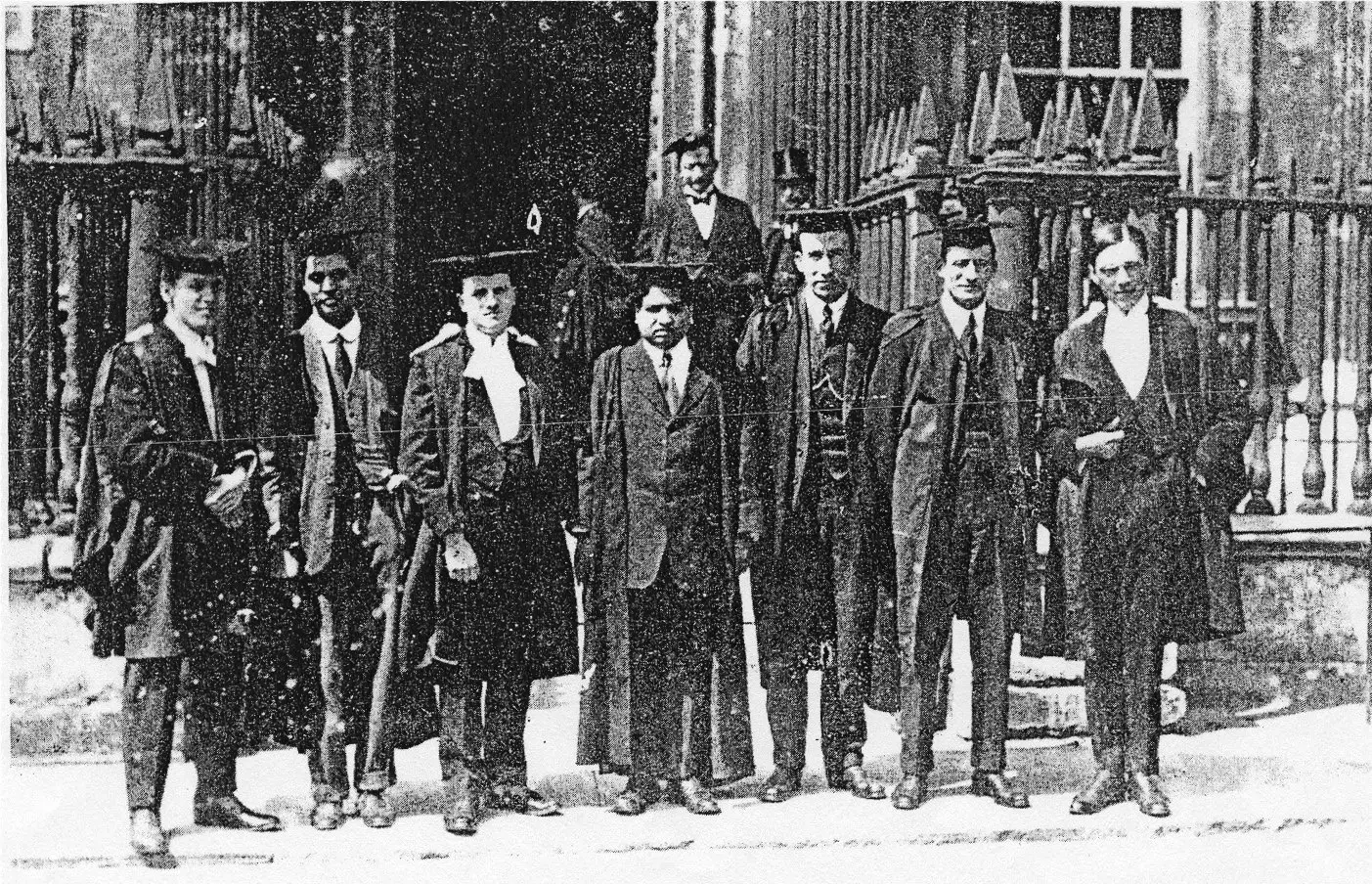
- He sailed from Madras on 17 March 1914. The trip was paid for from an unused government grant meant for university lectures.[2][3]
- World War I began months later. Vegetarian food was scarce and many Cambridge mathematicians left for war work.[3]
- Hardy wanted rigorous proofs. Ramanujan worked from intuition. Both found the clash hard.[2]
- Littlewood said "every positive integer was one of his personal friends."[3]
- In March 1916 he received a BA by Research for a 50-page paper on highly composite numbers.[2]
- With Hardy he found a formula for counting partitions of a number. Hans Rademacher made it exact in 1937.[2]
- His 1914 series for pi was used by Bill Gosper in 1977 to set a record, and similar methods are still used to compute pi.[3]
- His tau function led to the Ramanujan conjecture, proved in 1973 through Pierre Deligne's Fields Medal work.[2]
- In 1918 he became a Fellow of the Royal Society, the second Indian and one of the youngest ever, and the first Indian Fellow of Trinity College.[2]
06Illness and the last year
- He fell ill in May 1917. Doctors suspected tuberculosis. A 1994 review of his records points to a liver infection that was curable at the time.[3][2]
- In late 1917 or early 1918 he attempted suicide on the London Underground. Hardy stepped in when police arrested him.[2]
- Visiting him in hospital, Hardy called his taxi number, 1729, dull. Ramanujan replied it is the smallest number that is the sum of two cubes in two different ways.[2]
- He went home to India on 13 March 1919, famous and very ill.[3]
- On 12 January 1920 he sent Hardy a letter on a new idea, "mock" theta functions.[3]
- His wife Janaki said that in his last days, in severe pain, "he continued doing his mathematics filling sheet after sheet with numbers".[2]
- He died on 26 April 1920, aged 32, three days after his last notebook entry.[3]
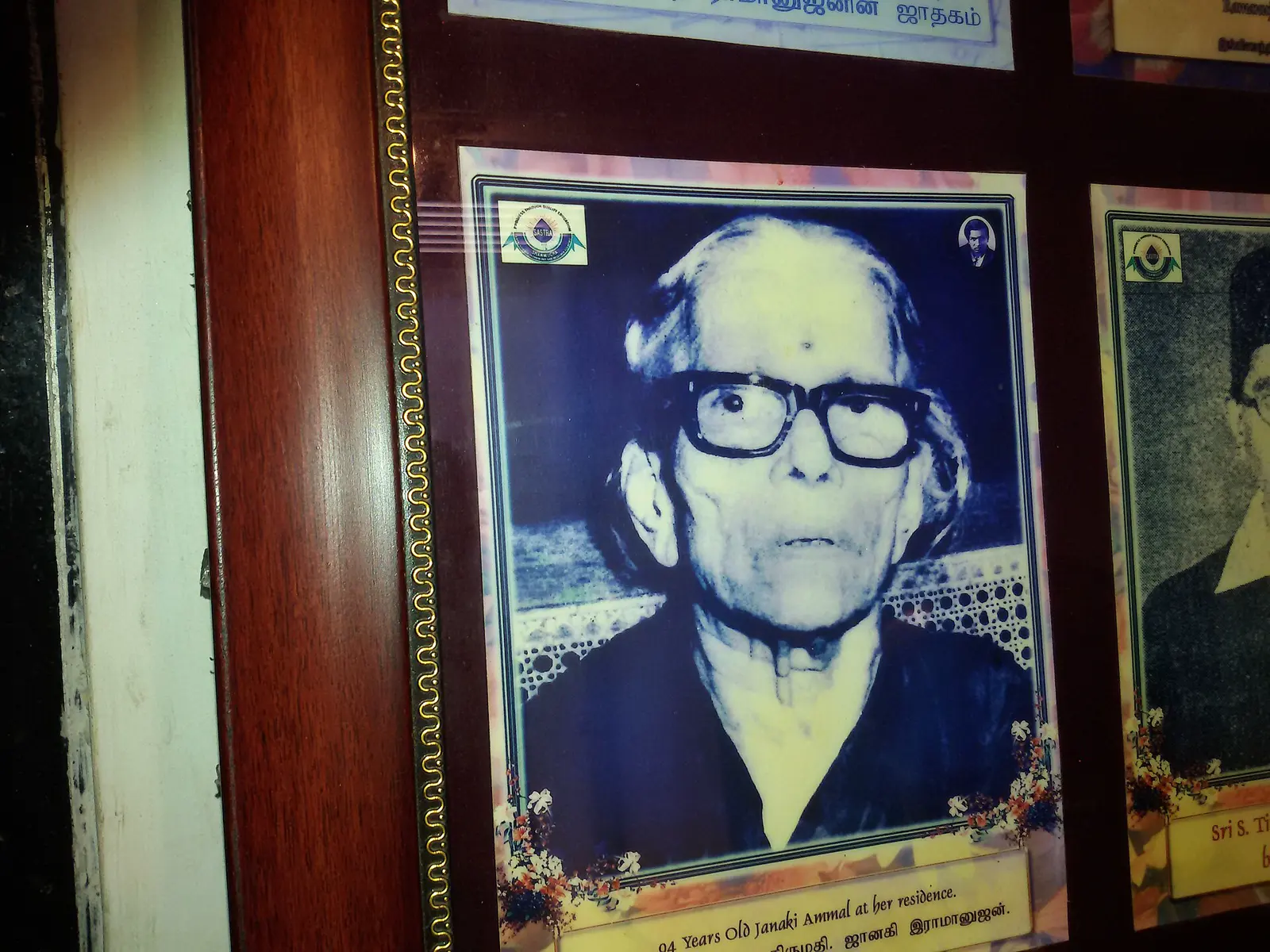
- Janaki was 21. She lived on tailoring and pensions, including one from the Madras Port Trust, and died in 1994.[3][2]
07The good and the bad
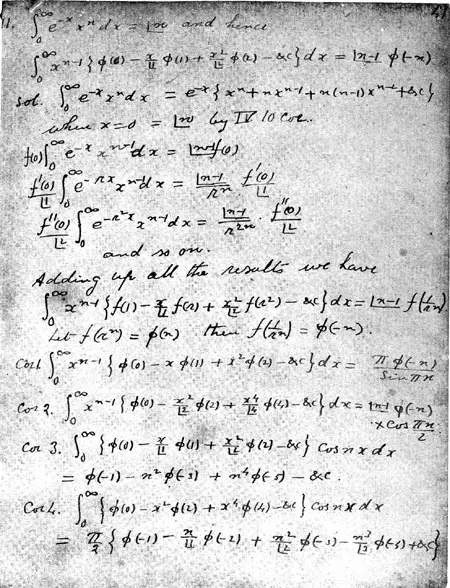
- Good: he left nearly 3,900 results, and most have since been proved correct.[2]
- Good: Hardy rated pure talent from 0 to 100. He gave himself 25, Littlewood 30, David Hilbert 80 and Ramanujan 100.[2]
- Bad: his bold claims about prime numbers were wrong. Littlewood: "The stuff about primes is wrong."[3]
- Bad: he often gave no proofs. Hardy wrote: "The limitations of his knowledge were as startling as its profundity."[2]
- He credited his family goddess Namagiri and is often quoted as saying: "An equation for me has no meaning unless it expresses a thought of God."[2]
- Bruce Berndt, who spent decades proving his results, pushes back on the mystic image: "He has meticulously recorded every result in his three notebooks."[2]
08Legacy and memorials
- In spring 1976 George Andrews found his "lost notebook" in a box at Trinity's Wren Library: 138 sides with over 600 formulas.[4]
- Berndt said the find caused as much stir as Beethoven's tenth symphony would in music.[4]
- Hardy called their partnership the "one romantic incident" of his life.[3]
- India marks 22 December, his birthday, as National Mathematics Day. It was declared in 2011, and 2012 was National Mathematics Year.[2]
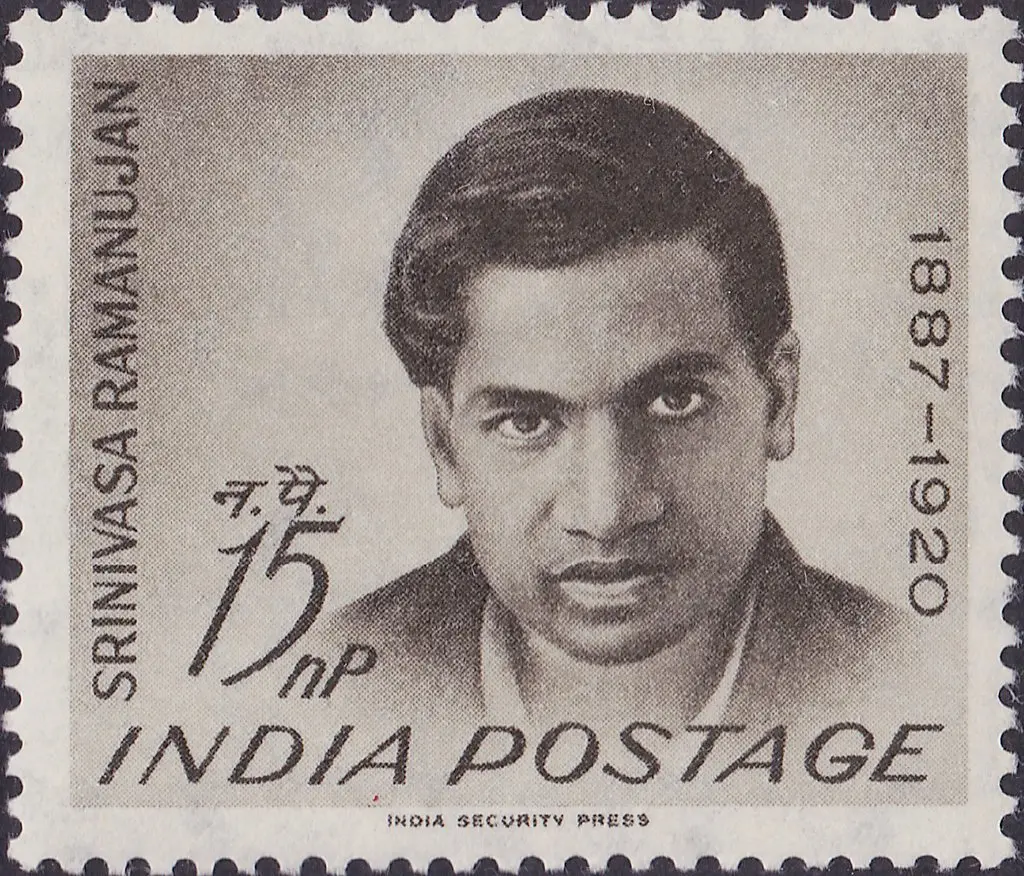
- India issued stamps of him in 1962, 2011, 2012 and 2016. SASTRA University bought his Kumbakonam home and runs it as a museum.[2]
- The SASTRA Ramanujan Prize gives $10,000 a year to a mathematician aged 32 or under. The ICTP also awards a Ramanujan Prize to young mathematicians from developing countries.[2]
- His life became the 2015 film The Man Who Knew Infinity, with Dev Patel.[2]
Lessons
- Send your work to people who can judge it. Two professors ignored him, and the third letter changed his life.
- Find work that pays the bills and leaves your head free. A Rs 30 clerk's job gave him time to think.
- Write everything down. His notebooks kept producing new mathematics for a hundred years after his death.
- Learn the rules of the field you want to enter. His wrong prime-number claims show what intuition alone can miss.
- Look after your health. He might have been cured if his illness had been diagnosed correctly.